Can You Strength Train During IVF? The Truth About Exercise, Hormones & Fertility
Can You Strength Train During IVF? The Truth About Exercise, Hormones & Fertility
Jul 30, 2025
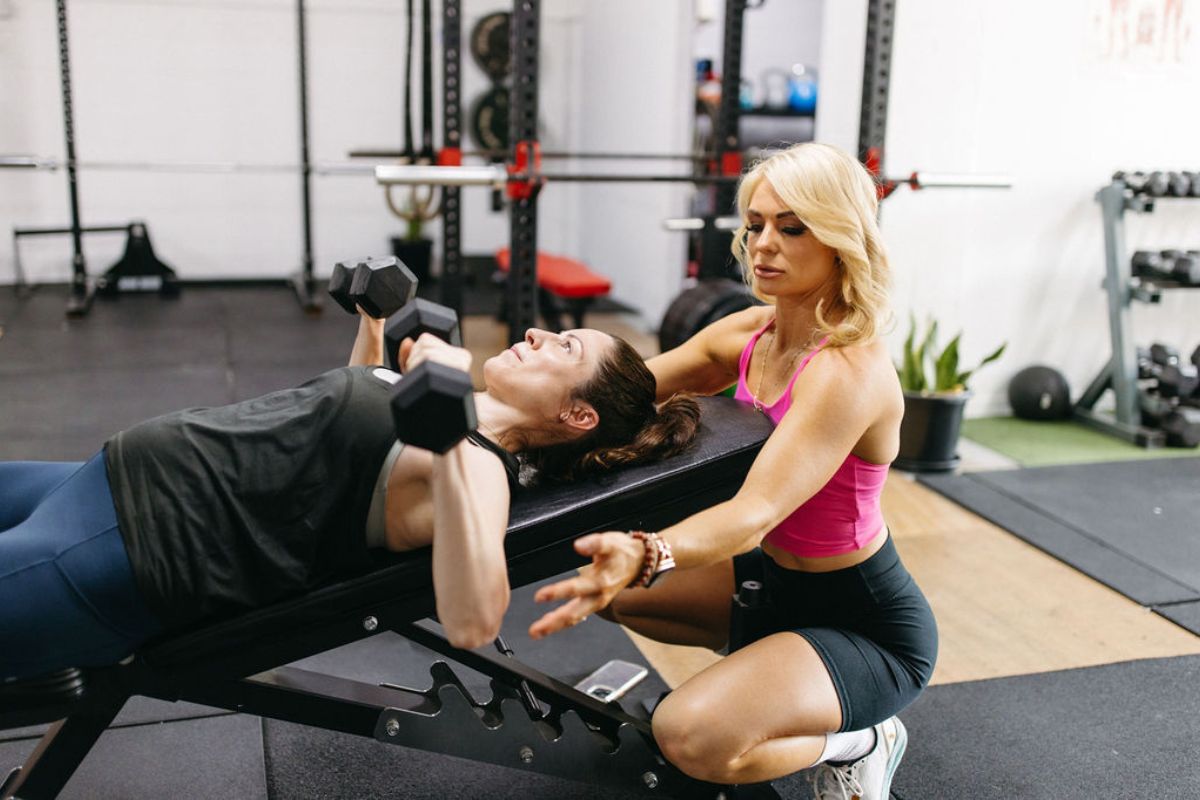
Trying to conceive, especially through IVF can be one of the most emotional and physically demanding journeys a woman will ever go through.
So it’s no surprise there’s a lot of confusion (and a heap of misinformation) around exercise.
One moment, you’re told to stop training. The next, you’re told to keep moving but not too much. So what’s the truth about strength training and IVF?
Let’s break down the facts, the myths, and how to train smart at every phase of your IVF journey.
Why Exercise Matters When You’re Trying to Conceive
Regular, moderate exercise is universally acknowledged as beneficial for fertility. It improves insulin sensitivity, reduces inflammation, regulates hormones, and supports a healthy BMI all of which increase the odds of conception, whether naturally or via assisted reproductive treatments (ART) like IVF.
For women with PCOS, consistent aerobic and strength training has been shown to improve ovulation, even without weight loss.
That’s critical, because women with PCOS often face longer fertility timelines and irregular cycles.
So yes, movement matters. But the type, timing, and intensity of your training matters more.
IVF Isn’t Just a Medical Procedure, It’s a Hormonal Rollercoaster
IVF involves multiple stages, each with distinct hormonal profiles. That means your body and its response to exercise will feel very different week to week.
Let’s break it down phase by phase:
Foundation Phase (16+ Weeks Before IVF Begins)
This is your window to build the healthiest body possible.
Goal: Reduce inflammation, improve metabolic function, and support egg (and sperm) quality.
Best Practice:
- Strength training 2–3x/week (70-85% 1RM)*
- Aerobic exercise (e.g. walking, cycling, incline treadmill)
- Prioritise sleep (6–8 hours minimum)
- Avoid: chronic under-recovery, under-fuelling, poor sleep hygiene
This is also the ideal time to modify body composition if needed, especially abdominal fat, which is linked to reduced fertility.
*RM = Rep Max. It is how we measure intensity at The Evolved All Female Gym. This window of intensity is considered (medium-high) and it carries the most physiological, metabolic and hormonal benefit of all exercise
Stimulation Phase (Days 1–12 of Cycle)
This is when your ovaries are working overtime.
Hormonal Reality: Ovaries enlarge due to follicle-stimulating medications. You may feel bloated, tender, and fatigued.
Main Risk: Ovarian torsion (ovary twisting on its own ligament). Rare (~0.03%), but serious.
Training Recommendation:
- Continue strength training reducing intensity by 5-10%
- Avoid high-intensity cardio, twisting motions, jumping, or strength testing
- Remain active, move lightly each day to keep the blood flow moving
Retrieval Phase (48–72 Hours Post-Egg Collection)
Your body needs time to recover.
- Skip: Structured workouts, loaded movements, group classes
- Do: Gentle walks, deep breathing, light mobility
- Focus: Quality sleep, staying hydrated, minimising risk of infection
Post-Retrieval / Transfer Prep (Up to 2 Weeks)
You may still be experiencing bloating or ovarian hyperstimulation.
- Avoid: High-impact workouts, deep core engagement, long cardio sessions
- Good Choices: Return to routine you had prior to retrieval easing into a similar intensity level based on how you feel
- Bonus: Continue supporting blood flow to the pelvis with movement of that area
Post-Transfer & The Two-Week Wait
The embryo is implanting. That means stress, blood flow, and hormone balance really matter now.
Best Practice:
- Walk daily
- Gentle yoga (avoid inversions)
- Breath work, sleep, nervous system regulation
Avoid: Testing strength, saunas, HIIT, new exercises, hot baths
Important Note: Total bed rest may actually reduce implantation rates. Movement matters.
Strength Training Isn’t the Problem, Stress Without Recovery Is
It’s not resistance training that harms fertility. It’s chronic stress, under-eating, under-recovery, and inflammation that does.
That’s why:
- High-volume HIIT, overtraining, and constant calorie deficits are problematic.
- But lifting weights 2–3x/week with proper recovery? That’s beneficial.
If you’re already a lifter you don’t need to stop, you need to scale.
If you’re not yet lifting and you are in your Foundation Phase now is the time to start strength training if you want it to be a healthy part of your long term pregnancy plans.
If you're in the Stimulation Phase or beyond it is best to just maintain light activity and begin an introduction to strength training with us towards the end of your first trimester and early in your second if you want the benefits of a strong & healthy pregnancy.
And finally, if you are multiple cycles into back to back IVF treatments we have worked with several women who have decided to pause IVF so they can take the time to work on their health who have seen positive outcomes from that time off.
At The Evolved All Female Gym we aim to reduce the stigma around strength training so women can experience it's amazing benefits on long term health, re-productivity and fetal development.
This means clearing up exactly what Heavy Resistance Training Means.
When the medical community says avoid heavy resistance training what they really mean is lifting weights that are beyond your ability.
We define it based on your own data.
Heavy training is not a one-size-fits-all prescription, it’s relative to your body, your cycle, and your history.
For one woman, that might be a 100kg deadlift. For another, it’s a 15kg squat with pristine form.
That’s why we track every rep, every lift, and every training session.
Having this data becomes incredibly valuable in the lead-up to your IVF Stimulation Phase. It allows you to:
- Understand what "moderate" vs "heavy" looks like for you
- Scale your workouts intelligently without losing progress
- Feel empowered to train based on evidence, not guesswork
This approach is a hallmark of what we do at The Evolved.
We help women learn their bodies, track their cycles, and use strength as a tool for both transformation and fertility. Our data-led coaching removes the fear and replaces it with confidence, so when it’s time to adjust your training, you know exactly how to do it.
Final Word: Your Body’s Still Worth Investing In
IVF is demanding, but strength training can still be part of your journey. Not just for your physical outcomes, but for your emotional strength, stress resilience, and sense of control.
You’re not weak for modifying your training. You’re not fragile for needing rest.
You’re evolving.
And you deserve evidence-based support every step of the way.
Want more expert guidance on training through fertility, hormone transitions, and every season of womanhood? click here to learn more about being guided by one of our expert female coaches at The Evolved.